Source Anti Kink Expandable Garden Hose for Home, Garden, and Farm
Explore 30 listings for the anti kink expandable garden hose, featuring flexible latex and PVC options with fiber braided reinforcement. Compare sizes from 6mm to 2 inches, brass or plastic connections, and various lengths to find the right fit for your watering needs.
Key considerations
Products List




Comprehensive Sourcing Guide
Anti Kink Expandable Garden Hose Sourcing Guide
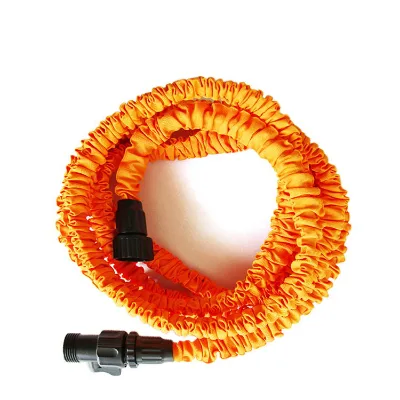
Procuring anti-kink expandable garden hoses requires distinguishing between standard flexible tubing and specialized designs that maintain flow under pressure. The observed market features products explicitly labeled as expandable, with some models capable of stretching three times their original length while retaining structural integrity. Buyers must verify that the "anti-kink" attribute is a verified performance characteristic rather than a marketing term, ensuring the hose does not collapse when bent sharply during operation.
The supply base includes manufacturers offering customization for branding and dimensions, with origins primarily located in Zhejiang and other regions of China. While some listings mention specific models like the HYRUBBERS-35 or snake garden hose variants, the core functionality relies on materials such as latex, natural rubber, or thermoplastic pipes. Sourcing strategies should prioritize suppliers who provide clear evidence of the hose's ability to expand and contract without permanent deformation or leakage at the connection points.
Product Scope and Observed Listing Signals
The product scope encompasses a wide range of expandable garden hoses, including those with fiber braided reinforcement and those constructed from thermoplastic materials. Listings indicate that these hoses are designed for water supply applications in garden settings, often featuring brass or plastic connections to ensure a secure fit with standard faucets. The observed data suggests that while some products are sold as single items in PP bags, others are packaged in color boxes within cartons, reflecting different target market segments.
Buyers should note the variability in product attributes, such as color options ranging from black and red to blue and grey, and the availability of customized colors. The observed listings show that some hoses are hollow and round, with specific size specifications like 6mm or 6*9mm, while others offer a broader range from 1/4" to 2". This diversity requires careful filtering to match the specific flow rate and pressure requirements of the intended application, ensuring the selected product aligns with the user's physical needs.
Technical Specifications to Verify
Technical verification must begin with the material composition, as the observed data lists plastic, PVC, latex, and natural rubber as common constituents. Buyers should confirm that the specific model selected utilizes a material blend that balances flexibility with durability, particularly for the anti-kink performance. The presence of fiber braided reinforcement is a critical indicator of structural strength, preventing the hose from bursting under high pressure or collapsing when kinked during use.
Dimensional accuracy is equally vital, with observed specifications ranging from small 6mm diameters to larger 1/4" to 2" sizes. The length of the hose is a significant variable, with options available in 25FT, 50FT, 75FT, and 100FT configurations. Procurement teams must validate that the outer diameter and length match the project requirements, as the expansion ratio of three times the original length can significantly alter the stored and deployed dimensions of the hose.
Compliance and Safety Documentation
Compliance verification should focus on the presence of recognized quality management standards, such as ISO9001 or ISO9001-2008, which are cited in several product listings. These standards indicate that the manufacturer has established processes for consistent quality control, which is essential for products that undergo significant expansion and contraction cycles. Buyers should request certificates of conformity to ensure the manufacturing facility adheres to these documented quality protocols.
Safety documentation must also address the materials used in contact with water, ensuring they are safe for potable or garden water supply applications. While some listings mention CE certification, the reliability of this claim should be verified through official documentation rather than assumed from the product page. Additionally, the use of brass or plastic connectors should be confirmed to ensure they do not leach harmful substances, maintaining the safety integrity of the water supply system.
Cost Drivers and Commercial Terms
Cost drivers for these hoses include the complexity of the braided reinforcement, the type of raw material used, and the degree of customization required for branding. The observed price range spans from $0.1 to $900, reflecting the vast difference between basic single-item units and bulk orders with custom packaging or specialized features. Buyers must analyze the total cost of ownership, considering that higher-priced items often include better durability and more robust connection hardware.
Commercial terms vary significantly, with some suppliers requiring a 30% T/T deposit and others offering flexible payment structures. The minimum order quantity (MOQ) ranges from 1 to 2000 units, allowing for both small-scale testing and large-scale distribution. Procurement teams should negotiate based on the specific volume needs, ensuring that the payment terms and lead times align with the project timeline and cash flow requirements.
Supplier Qualification and Quality Control
Supplier qualification should prioritize manufacturers with a proven track record in producing expandable hoses, as evidenced by their specific product models and material expertise. The observed data indicates that many suppliers are located in China, with a concentration in Zhejiang, suggesting a mature supply chain for these specific products. Buyers should verify the supplier's capability to produce the specific model, such as the HYRUBBERS-35 or snake garden hose variants, to ensure they have the necessary production lines.
Quality control processes must be robust enough to handle the unique challenges of expandable hoses, such as maintaining the expansion ratio and preventing leaks. Suppliers should demonstrate their ability to provide samples for testing, as indicated by the "Sample: Available" attribute in the listings. Establishing a clear quality agreement that defines acceptable tolerances for dimensions, material strength, and connection integrity is essential for maintaining product consistency across large orders.
Long-Term Procurement Checks
Long-term procurement checks should focus on the durability of the hose under repeated expansion and contraction cycles, which is the primary stress point for this product type. Buyers should implement a schedule for periodic quality audits to ensure that the anti-kink performance remains consistent over time and that the material does not degrade due to UV exposure or chemical reactions. This proactive approach helps prevent costly replacements and maintains the reliability of the water supply system.
It is also critical to monitor the supplier's ability to maintain consistent supply and quality over the long term, especially given the variability in observed product attributes. Buyers should establish a feedback loop to address any recurring issues, such as connector failures or material inconsistencies, and ensure that the supplier remains responsive to changing market demands. Regular reviews of the supplier's performance against the agreed-upon standards will help sustain a successful procurement relationship.
FAQs
What materials are used in anti kink expandable garden hoses?
These hoses typically use latex for the inner tube to allow expansion and fiber braiding for reinforcement. Some models incorporate plastic or natural rubber components. The outer layer is often a thermoplastic material. This combination ensures flexibility and durability while preventing kinks during water supply usage in garden applications.
How much does an anti kink expandable garden hose expand?
The hose expands up to three times its original length when water pressure is applied. This feature allows for easy storage and handling. The expansion capability is a key characteristic of expandable garden hoses, making them convenient for various garden tasks without the bulk of traditional heavy hoses.
Can I customize the logo on these hoses?
Yes, customized logos are acceptable for these products. Buyers can request specific branding on the hose or packaging. This customization service is available for bulk orders. It allows businesses to brand the hoses for retail or promotional purposes, enhancing brand visibility in the market.
What standards do these hoses meet?
These hoses may comply with standards such as ISO9001, CE, and SGS. Some products also reference ANSI, DIN, JIS, or BS standards. These certifications indicate quality management and safety compliance. Buyers should verify specific standard documentation with suppliers to ensure the product meets their regional regulatory requirements.
What are the typical packaging options for these hoses?
Packaging options include carton boxes, plastic film, or woven bags. Some hoses are packed in color boxes for retail. Individual units may be placed in PP bags before being packed into cartons. Pallet packaging is also available for larger orders. These options protect the product during shipping and storage.
What is the minimum order quantity for these hoses?
The minimum order quantity ranges from 1 to 2000 units depending on the supplier. Small buyers can often order single items or small batches. Larger quantities may offer better pricing. Buyers should check specific supplier listings for exact MOQ requirements, as they vary by manufacturer and product model.
Where are these hoses manufactured?
These hoses are primarily manufactured in China, with some origins in Zhejiang province. Zhengjiang is also mentioned as a production location. Chinese manufacturers offer a wide range of specifications and customization options. Buyers can source directly from these regions to access competitive pricing and diverse product models.